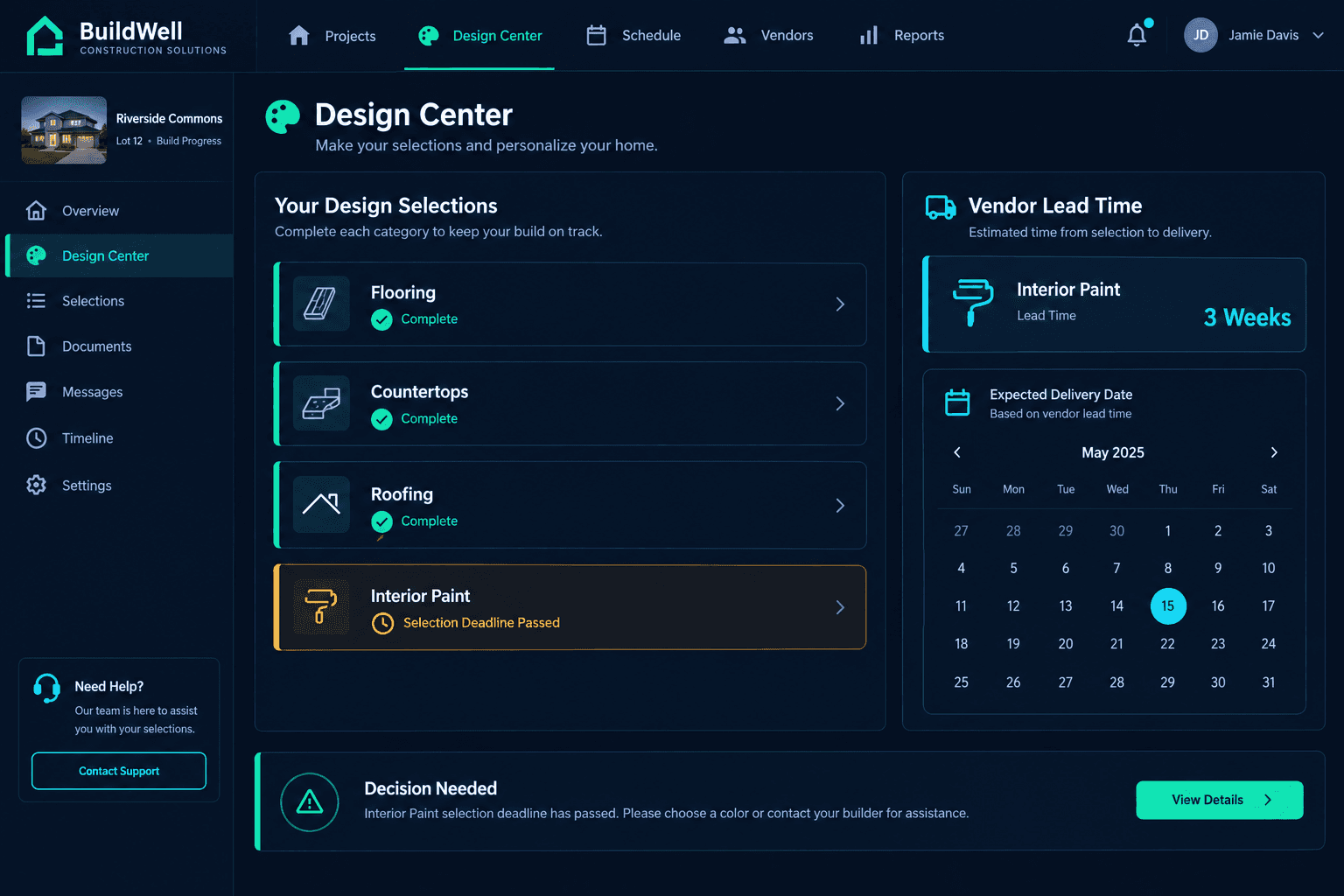
A Buyer Missed the Selection Deadline: What to Check Before You Hold the Schedule
A missed selection deadline isn't automatically a schedule problem — it's only a problem if the open category is actually needed soon. Check what's still open in the Design Center, confirm the real vendor lead time behind it, give the buyer one firm date, then decide — hold the home or move ahead on a standard option — and write the decision down.
Every production builder has a version of this call: the flooring deadline passed three days ago and the buyer still hasn't picked between the two samples they took home. The instinct is to either panic and hold the house, or ignore it and hope they decide before it matters. Neither is a process. A missed deadline deserves a quick, specific review — not a guess.
What should you actually confirm first?
Before reacting to the missed date, pull up the home's selection progress and separate what's genuinely incomplete from what only looks unfinished. Cornerstone's exclusion groups mark a category complete the moment a buyer picks one option from a flooring or roofing group, so a category showing as open is actually open — not an artifact of a selection sheet that technically allowed every option to stay optional. That distinction matters before you spend a phone call chasing a decision that was already made.
Confirm the category is actually open
Check the real selection status before assuming a missed deadline means a missing decision.
Check the real lead time, not an assumed one
A missed deadline on a short-lead item isn't urgent yet. The same miss on a long-lead item already is.
Does a missed deadline mean the schedule is actually at risk?
Not automatically. A deadline is a buffer, not the order date itself. If the open category has weeks of slack before the vendor actually needs the order placed, a missed internal deadline is a nudge to follow up — not a reason to hold the home. The categories that genuinely threaten the schedule are the ones with long vendor lead times where the slack between “deadline passed” and “order has to go out today” has already closed. Check the actual lead time behind the category before treating every missed date the same way.
What do you say to the buyer — a reminder or a deadline?
A generic reminder tends to get the same response the first deadline did: nothing. A specific date tied to a specific consequence is different — “we need your flooring selection by Friday at 5pm, or the standard option ships with the home” gives the buyer an actual decision to make instead of a soft nudge to eventually get around to. Put the new date and the consequence in writing, through whatever channel your role-based notification setup routes sales and design communication through, so there's a record of what was said and when.
Sending a reminder isn't the same as resolving it
A follow-up going out doesn't mean the buyer saw it, agreed to it, or decided anything. Treat the deadline as open until a selection is actually logged or a decision is confirmed back.
Who decides to hold the home or move ahead on a default?
If the firm follow-up date passes without a decision, someone with actual authority — usually the project manager or sales lead, not whoever happens to notice the deadline passed — has to choose a path: hold the home until the buyer decides, or move forward with the builder's standard, included option for that category. Cornerstone won't make that call for you. What it does give you is a clean record in the purchasing and design history to show exactly when the deadline passed, what the lead time actually was, and what was communicated to the buyer — so the decision isn't a surprise to anyone three weeks later.
Document whichever path gets chosen the same way you'd document a change order: who decided, when, and why. A verbal agreement to “just go with the standard option” that never gets written down is how a builder ends up relitigating the same selection at the final walkthrough.
A missed deadline is routine — an undocumented one isn't
Buyers miss selection deadlines constantly; it's one of the most predictable friction points in a production build. Confirming what's actually open, checking the real lead time behind it, giving one firm date instead of a vague reminder, and writing down whoever decides to hold or proceed is what keeps a missed deadline from turning into a disputed decision later.
See which selections are actually open — before a deadline slips
Cornerstone PM's Design Center tracks real selection progress by category, so a missed deadline is a clear, specific follow-up — not a guessing game.
Request Early Access